
Description
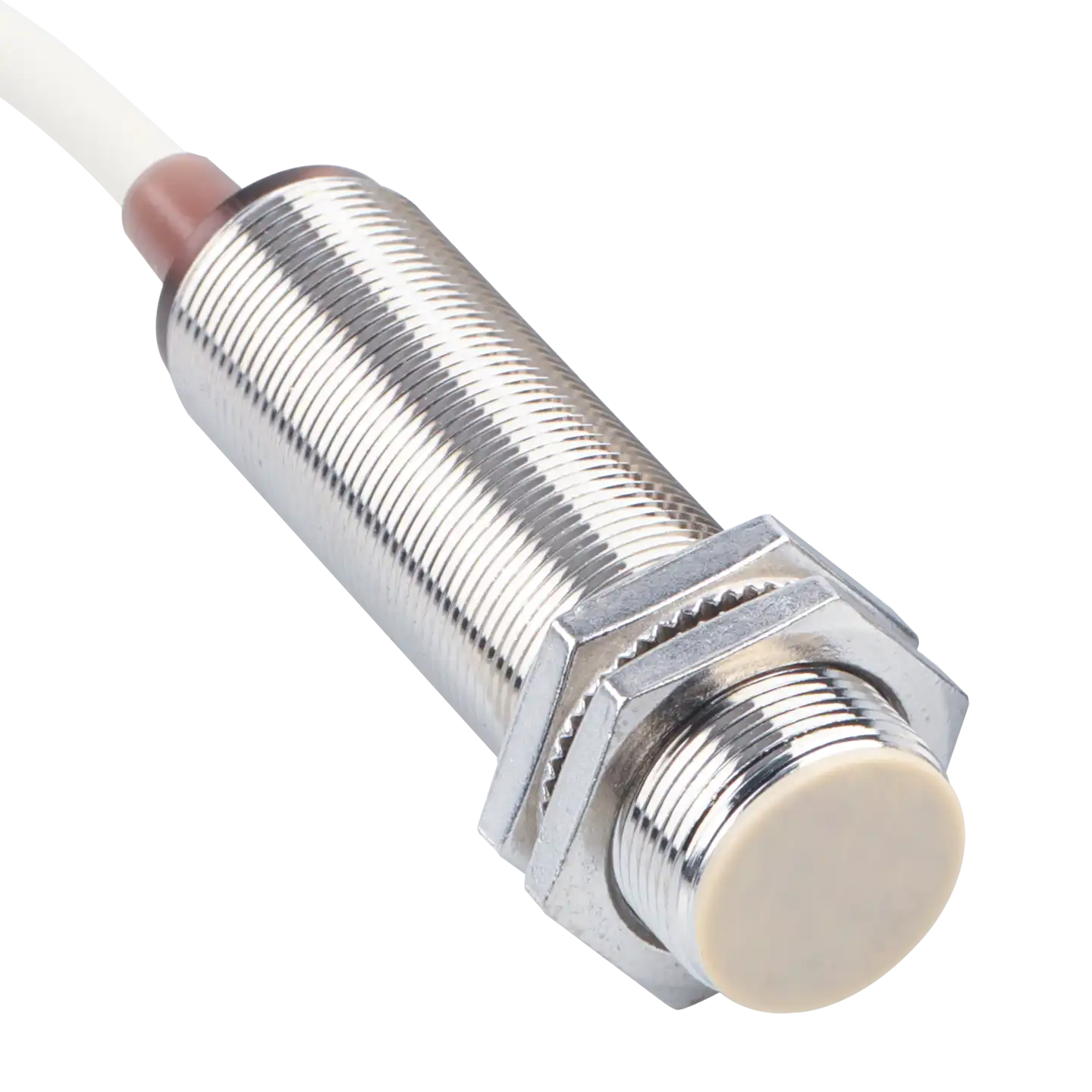
M18 inductive detection for metal targets
The XSZ M18 cylindrical inductive proximity sensor range is presented in a threaded housing for non-contact detection of metal. The supplied range specification distinguishes a flush-mount version with a nominal 5 mm sensing distance from a non-flush-mount version with a nominal 8 mm sensing distance.
Choose the mounting style first, then match the required NPN or PNP output and normally open or normally closed operation to an exact model. The range-level information below does not identify orderable part numbers or establish that every option is available in every combination.
Compare flush and non-flush versions
These values come from the supplied M18 series table. Each nominal sensing distance is specified against a different standard iron target, so compare them in the context of the intended part and mounting arrangement.
| Specification | Flush mount | Non-flush mount |
|---|---|---|
| Nominal sensing distance | 5 mm ±10% | 8 mm ±10% |
| Standard sensing object | Iron 18 × 18 × 1 mm | Iron 24 × 24 × 1 mm |
| Response frequency | 600 Hz | 400 Hz |
The listed detectable target is magnetic metal. The source notes that sensing distance decreases for non-magnetic metals; test the actual material, size and approach direction in the final installation.
Electrical and environmental specifications
The supplied table presents the following as shared M18 range information. Confirm each value and output combination against the current datasheet for the selected part number.
Power and switching
| Operating voltage | 10–30 VDC; the source also states 12–24 VDC nominal and 10% maximum peak-to-peak ripple. |
|---|---|
| Output load current | 200 mA maximum |
| Residual voltage | 1.5 V maximum |
| Current consumption | 10 mA maximum |
| Output options | NPN or PNP; normally open (NO) or normally closed (NC). Exact combinations are model-dependent. |
Protection and connection
| Protection circuit | Reverse supply-polarity protection |
|---|---|
| Operating temperature | −25 to +70 °C |
| Storage temperature | −40 to +80 °C |
| Connection format | Pre-wired cable; length and conductor assignment are not specified in the supplied table. |
Select the right M18 version
For a metal-part detection task, start with the available mounting space and the target’s real size and material. The 5 mm and 8 mm figures are measured with their stated iron test objects; a non-magnetic target can have a shorter effective distance.
Before specifying or wiring a model
- Confirm flush or non-flush mounting, the exact threaded body dimensions and required surrounding-metal clearance.
- Check the target’s metal type, size and travel path against the required switching distance and response frequency.
- Match NPN/PNP and NO/NC operation to the controller input using the exact model’s wiring diagram.
- Verify supply quality, output load, cable length and site environment against the chosen model’s datasheet.
Where an M18 inductive sensor may fit
Potential tasks include confirming the position or presence of metal machine components, detecting metal fixtures on an automated line, and sensing metal parts passing a conveyor station. These are application examples, not a guarantee of performance in a particular machine.
Check the actual target, mounting geometry, switching speed and contamination at the installation point. The supplied specifications do not state an IP rating or chemical-resistance test, so environmental suitability should be evaluated for the selected model.
Frequently asked questions
Is the sensing distance the same for flush and non-flush M18 versions?
No. The supplied range table lists 5 mm ±10% for flush mount and 8 mm ±10% for non-flush mount, each using a different standard iron object.
Will the rated range apply to every metal?
Not necessarily. The source identifies magnetic metal as the detectable target and notes a reduced sensing distance for non-magnetic metals. Test the intended target under actual mounting conditions.
Are NPN, PNP, NO and NC all available on one sensor?
The source lists these as range options, not simultaneous functions of one part number. Select the exact output and switching version that matches the controller.
Can I wire the sensor from this series overview?
No. The supplied page does not include a usable wiring diagram or conductor assignment. Use the approved wiring information for the exact model.



Reviews
There are no reviews yet.