


Description
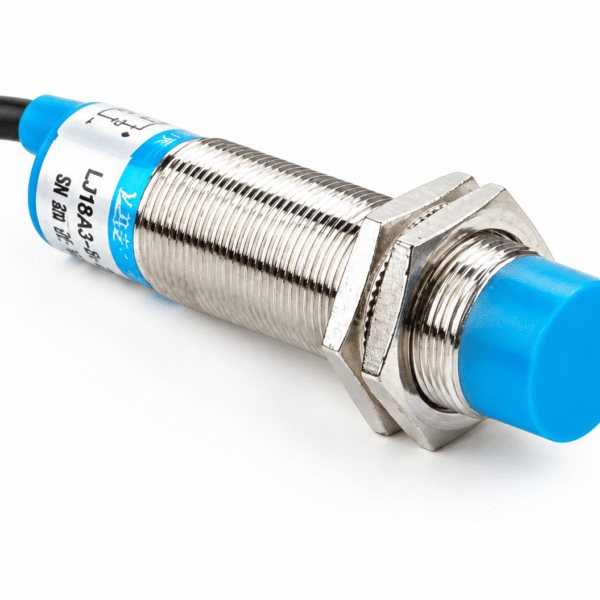
M18 non-shielded metal detection
PR18-8DN for close-range metal targets
The XSZ PR18-8DN is an M18 non-shielded proximity sensor with a DC NPN normally open output. The supplied model table lists an 8 mm sensing distance with ±10% tolerance and a 0–7 mm setting distance. Its standard detection target is iron measuring 30 × 30 × 1 mm.
PR18-8DN is one defined output configuration. The NC, PNP, DC two-wire and AC two-wire entries in the same table have different model codes; they are not modes that can be switched on this unit.
Working distance and target choice
The listed 8 mm distance refers to the specified standard iron target. The source gives a separate 0–7 mm setting distance for installation planning, leaving margin below the rated detection distance.
The table identifies magnetic metal as the detectable target and notes that the sensing distance decreases for non-magnetic metals. Check the real part’s material, size, position and approach path rather than assuming that all metal objects will be sensed at the same distance.
PR18-8DN technical specifications
These are values listed in the supplied M18 non-shielded table for PR18-8DN or the applicable N/P-type rows. Confirm the latest model-specific datasheet before final electrical and mechanical design.
| Model / mounting type | PR18-8DN / M18 non-shielded |
|---|---|
| Output configuration | DC NPN, normally open (NO) |
| Listed sensing distance | 8 mm ±10% |
| Setting distance | 0–7 mm |
| Standard detection target | Iron 30 × 30 × 1 mm |
| Hysteresis | Less than 10% of sensing distance |
| Source-listed DC supply | 12–24 VDC (source also gives 6–36 VDC); confirm how the two ranges apply |
| Source-listed ripple | Less than 10% peak-to-peak for DC type |
| Consumption current | Less than 13 mA, N/P-type source-table value |
| Listed control-output current | Less than 300 mA, N/P-type source-table value; verify the allowable load |
| Circuit protection | Reverse-connection protection, surge absorption and load short-circuit protection, as listed for N/P/D types |
| Environment | −30 to +65 °C, 35–95% RH; no freezing or condensation |
| Protection class | IP67 |
| Insulation resistance | At least 50 MΩ at DC 500 V, between energized parts and housing |
| Housing / sensing face | Nickel-plated brass / ABS |
Related M18 non-shielded model codes
The supplied matrix lists these as separate models. Their different output and wiring types should not be treated as selectable settings on PR18-8DN.
| PR18-8DN2 | DC NPN NC |
|---|---|
| PR18-8DP / PR18-8DP2 | DC PNP NO / NC |
| PR18-8DO / PR18-8DC | DC two-wire NO / NC |
| PR18-8AO / PR18-8AC | AC two-wire NO / NC |
Selection and installation checks
PR18-8DN can be evaluated for ordinary, non-safety metal-part presence or position feedback where an M18 non-shielded body and NPN normally open signal suit the machine design.
- Compare the actual part with the source’s iron 30 × 30 × 1 mm reference target; test non-magnetic metals at the intended operating distance.
- Plan from the listed 0–7 mm setting distance, then verify the necessary non-shielded mounting clearance against the approved drawing.
- Match the NPN normally open signal to the controller input and verify the DC supply, output load and wiring diagram for the exact order code.
- Confirm cable or connector style, body length and environmental conditions before the machine layout is finalized.
Frequently asked questions
Is PR18-8DN an NPN normally open model?
Yes. The supplied matrix identifies PR18-8DN as the DC NPN NO version. The NC and PNP choices have different model codes.
What is the difference between 8 mm sensing and 0–7 mm setting distance?
The source lists 8 mm ±10% against its standard iron target, while 0–7 mm is its separate setting-distance range for installation planning.
Will non-magnetic metal be sensed at the same distance?
Do not assume so. The supplied table says the sensing distance decreases for non-magnetic metals. Test the actual target and position.
What should be confirmed before connecting the sensor?
Confirm how the listed DC supply ranges apply, then check the exact cable or connector, wire assignment, output load and controller input against the current model documentation.



Reviews
There are no reviews yet.