

Description
E3S-GS30 detection through a 30 mm slot
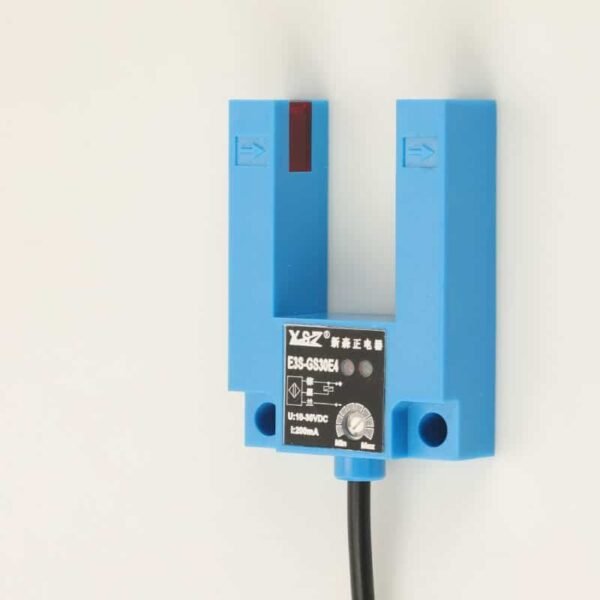
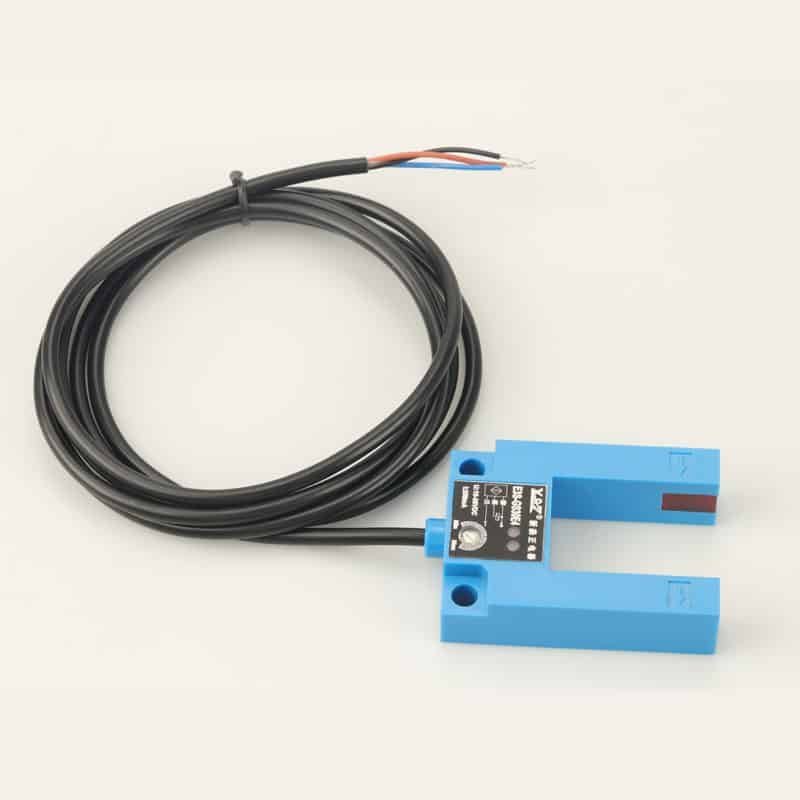
The XSZ E3S-GS30 is a groove-type photoelectric sensor for detecting an opaque target as it passes through a fixed slot. Its emitter and receiver are integrated in one housing, so the optical path is established within the sensor rather than by two separately mounted units.
The supplied product specification describes a 30 mm class opening and 12–24 VDC supply. Match the actual target and mounting path to the slot, then confirm the electrical output and wiring of the exact unit before installation.
What the slot needs to detect
A guided tab, sheet edge, carrier or small part can provide a repeatable detection event when it crosses and sufficiently interrupts the internal light beam. The part must also clear the housing throughout its travel, including expected sideways movement and vibration.
Use an opaque sample for initial evaluation. Transparent or translucent labels and films may not block enough light; their suitability requires testing with the actual material rather than relying on the word “label” in an application list.
E3S-GS30 supplied specifications
The values below are stated on the E3S-GS30 product listing. Check a current model drawing and datasheet before using them as installation limits.
| Model | E3S-GS30 |
|---|---|
| Sensor format | Slot / groove photoelectric sensor with integrated emitter and receiver |
| Detection method | An opaque target interrupts the optical path inside the groove |
| Slot opening | 30 mm class; confirm exact dimensions from the model drawing |
| Listed supply voltage | 12–24 VDC; confirm permitted tolerance for the unit ordered |
The supplied listing does not identify a fixed NPN/PNP or NO/NC output for this code. Match the selected output and connection details to the controller using its current wiring information.
Machine integration checks
- Measure the target thickness and full travel envelope against the slot width, depth and beam position.
- Test the smallest and least opaque intended target with the sensor at its installed position.
- Verify the output type, switching logic, cable or connector and approved conductor assignment for the ordered version.
- Run at the actual part speed and spacing, and verify that the controller captures every required pulse.
Position the sensor so the target crosses the internal beam without touching either side of the groove. Keep the optical windows accessible for inspection and cleaning where dust or residue may accumulate.
Potential applications
A guided opaque tab can mark a machine position; a suitably sized carrier or part can generate a passage or count signal; and an opaque sheet edge can be monitored where its travel is controlled through the slot. Each use depends on the exact beam location, target opacity and movement, so verify the signal with representative parts under operating conditions.
Frequently asked questions
Is the E3S-GS30 a reflective sensor?
No. It is a slot sensor with an emitter and receiver on opposite sides of its integrated groove. A suitable passing target changes the signal by interrupting the internal beam.
Does the 30 mm opening define the smallest detectable part?
No. Slot width provides mechanical clearance; minimum detectable target size also depends on the beam position and the target’s opacity and path. Confirm it by specification and sample testing.
Can it detect a clear label or film?
Do not assume so. Clear material can transmit light through the slot. Test the actual material or choose a sensor specified for that detection task.
What should be confirmed before wiring it to a PLC?
Confirm the ordered version’s output type and logic, supply limits and wiring diagram, then match them to the PLC input and required signal timing.