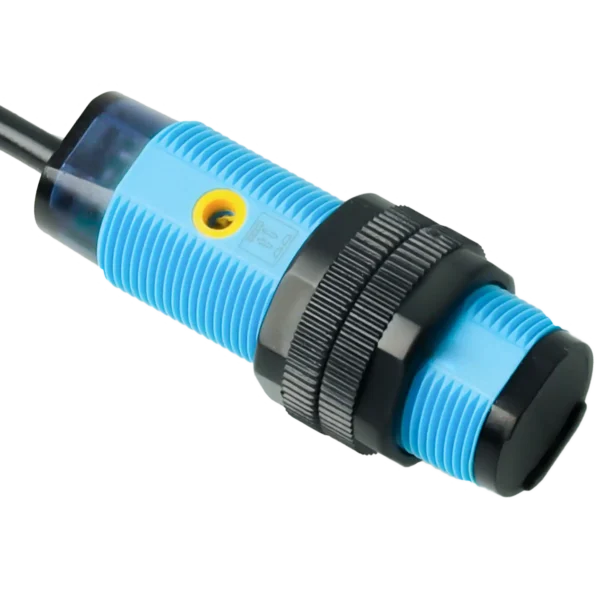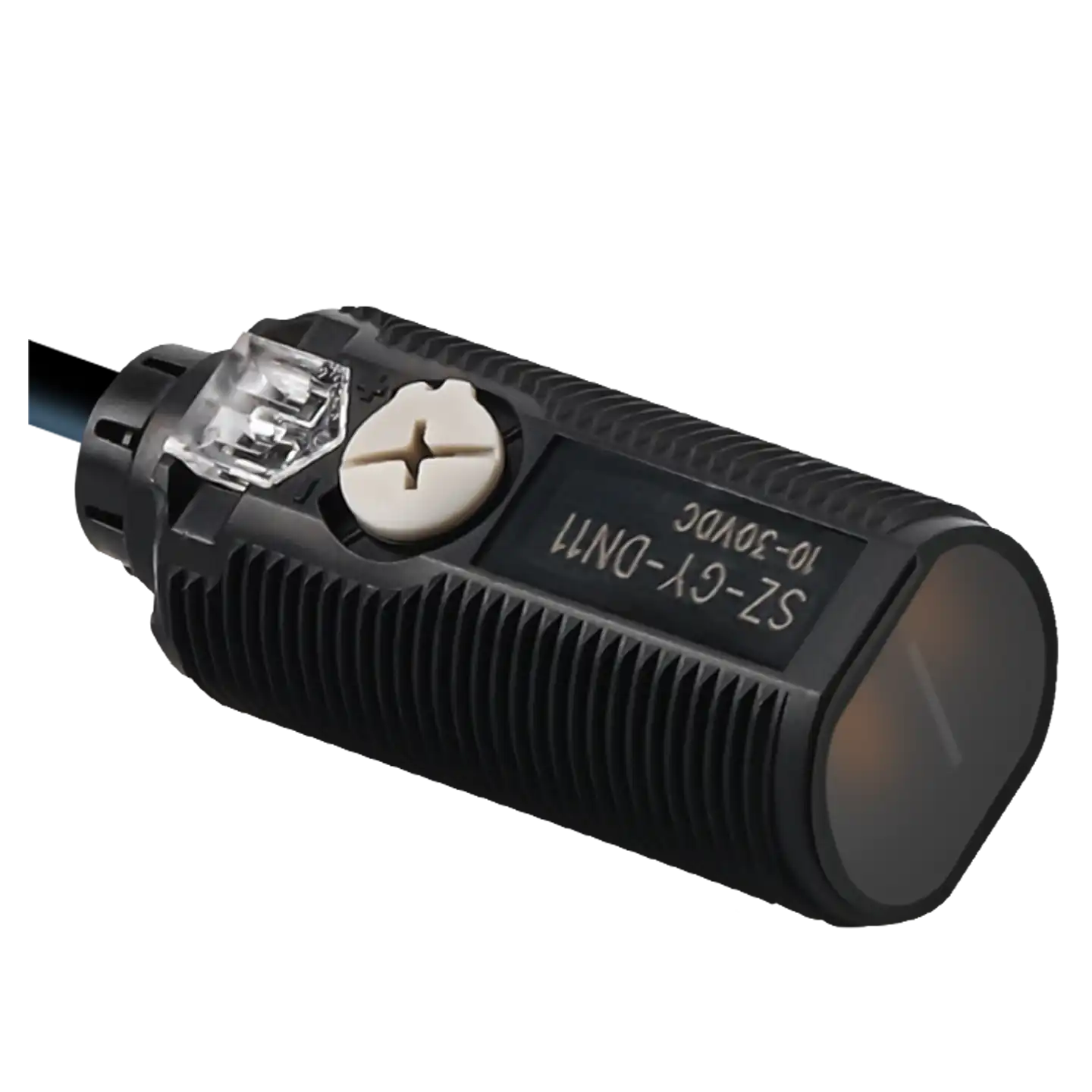
Description
E3FA M18 sensor range at a glance
The XSZ E3FA range brings photoelectric object detection to an M18 cylindrical housing format. The available series descriptions cover diffuse-reflective, retro-reflective and through-beam sensing. A background-suppression version is also mentioned, but its exact model and range must be specified separately.
Choose the sensing method around the target, background and available mounting space. The distance, output and wiring must then be matched to the exact E3FA model rather than assumed to apply across the series.
Choose the detection method first
The series information gives different upper distance figures for different optical arrangements. These are mode-level references, not a single sensor’s selectable ranges. Confirm the actual target, reflector or receiver arrangement and working distance for the model being ordered.
| Sensing method | Series-listed upper figure | Selection check |
|---|---|---|
| Diffuse-reflective | Up to 1 m | Check the actual target surface and background. |
| Retro-reflective | Up to 4 m | Check the specified reflector and alignment. |
| Through-beam | Up to 20 m | Allow space and wiring for emitter and receiver. |
Background suppression is described as an option in the series information, but no model code or rated range is supplied for it.
Series-level technical data
The figures below describe the supplied E3FA series material. Check the datasheet of the chosen model before using them for wiring or machine design.
Housing and optical options
| Housing format | M18 threaded cylindrical |
|---|---|
| Housing material options | ABS plastic or brass, depending on model |
| Detection methods described | Diffuse-reflective, retro-reflective and through-beam; background suppression mentioned as an option |
| Light source described | Visible red LED; confirm for the selected emitter model |
Electrical and environmental entries
| Supply entry | 10–30 VDC with a separately written ±10% tolerance; confirm the selected model’s rated range |
|---|---|
| Supply ripple | Less than 10% peak-to-peak |
| Output options described | NPN or PNP open collector; Light-ON/Dark-ON selection mentioned; model mapping required |
| Control-output entry | Maximum 100 mA, subject to the selected model’s current datasheet |
| Protection circuits described | Reverse-polarity and output short-circuit protection; verify by model |
| Operating temperature entry | −25 to +55 °C |
| Protection rating entry | IP67; confirm applicability and cleaning conditions for the selected model |
Installation and selection checks
Photoelectric performance depends on the optical arrangement and the target. For a diffuse version, check surface color and reflectivity; for retro-reflective and through-beam versions, plan the alignment and mounting of the other optical component.
Before choosing an E3FA model
- Identify the object, background, required working distance and sensing method.
- Confirm the exact model code, housing material, dimensions and connector or cable arrangement.
- Match the NPN/PNP output and Light-ON/Dark-ON behavior to the controller input using the model-specific wiring diagram.
- Check response time, ambient light, cleaning exposure and temperature against the selected model’s datasheet.
Frequently asked questions
Does every E3FA model sense to 20 m?
No. The 20 m upper figure is listed for a through-beam arrangement. The diffuse and retro-reflective modes have different upper figures, and the exact model rating must be checked.
Are NPN and PNP outputs selectable on one sensor?
The series description mentions both output types but does not identify which model supplies each. Confirm the code before ordering; do not assume both outputs are available on one unit.
Is background suppression included on every version?
No such claim is supported. It is mentioned only as a possible option; ask for the exact model code and rated distance if this function is required.
Which wiring diagram should I use?
Use the current diagram for the selected model and output type. Emitter, receiver, NPN and PNP arrangements may require different connections.