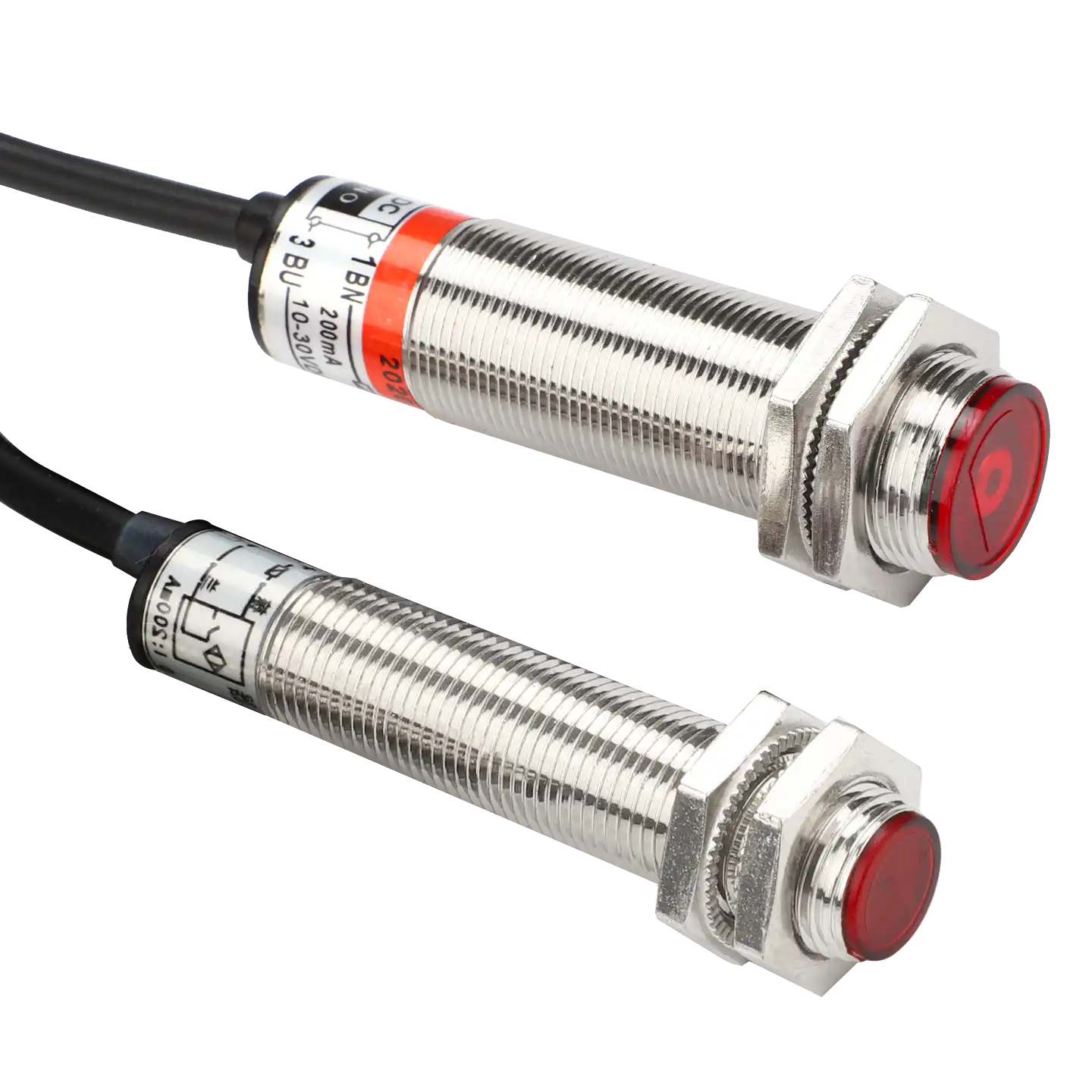
Description
M12 laser photoelectric sensing in a cylindrical housing
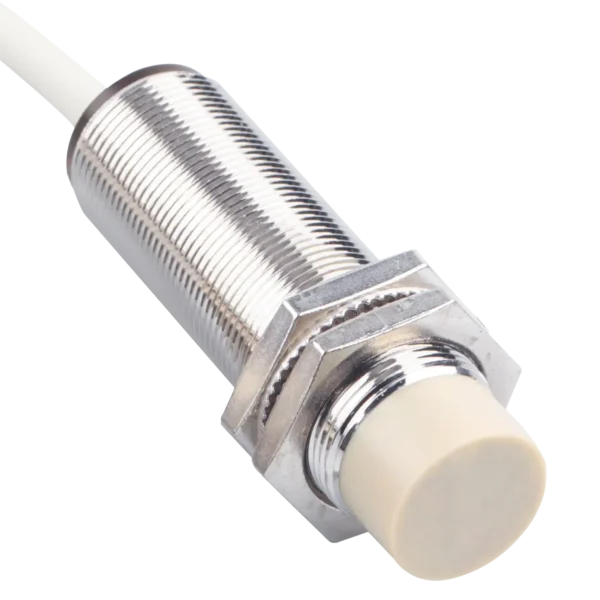
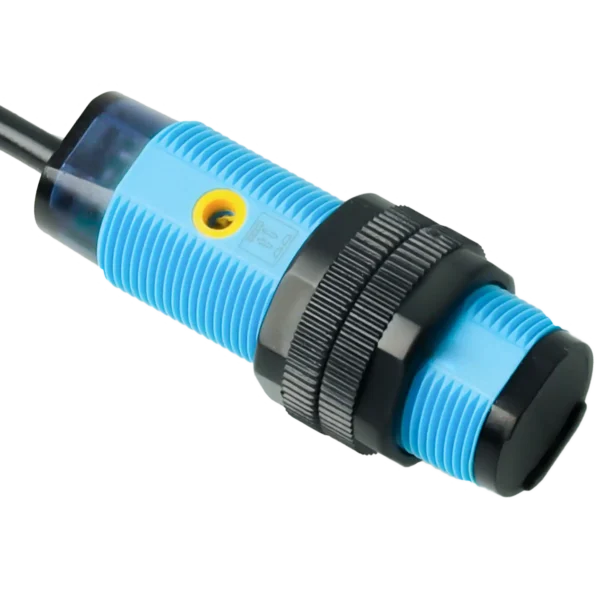
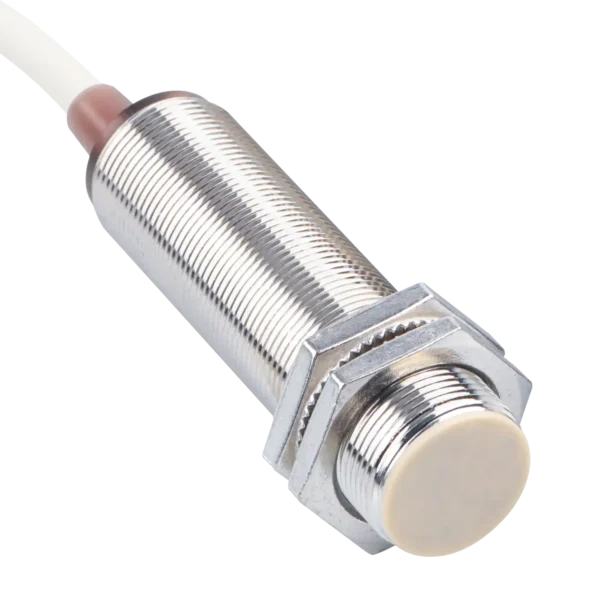
The XSZ M12 industrial cylindrical laser photoelectric sensor range uses a visible red laser light source in a threaded M12 body. The visible spot can help position the sensing point during setup, while the narrow cylindrical form suits mounting locations with limited space.
The supplied range description covers several optical arrangements and electrical outputs. Select the actual sensor model for its target, sensing distance, mounting layout and controller input; do not assume every listed option is available on one device.
Choose the sensing arrangement for the target path
Diffuse-reflective, retro-reflective and through-beam configurations are listed for the range. They require different optical layouts and may use different components. The source does not supply a model-by-model distance or configuration chart.
Diffuse-reflective configuration
Evaluate this arrangement when the sensor must respond to light returned from the target. Check the actual target surface, distance and background with the selected model.
Retro-reflective configuration
Evaluate the available reflector position and the path between sensor and reflector. Confirm the specified reflector and installation distance for the chosen version.
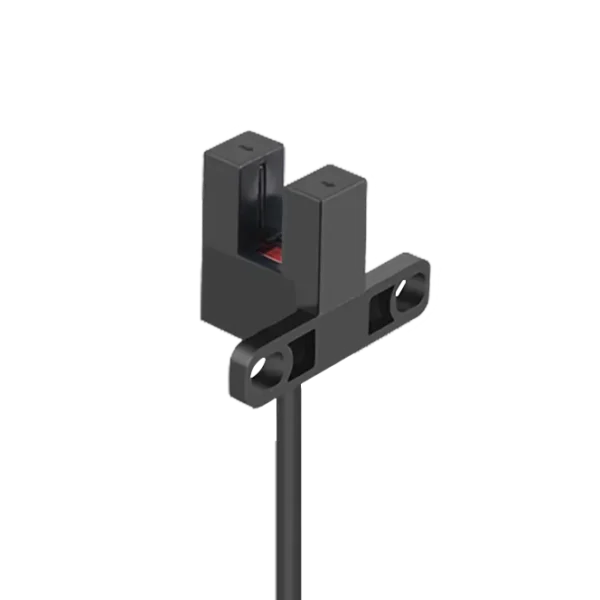
Through-beam configuration
Check that the machine can accommodate the required opposing optical components and alignment space. Confirm the matching emitter/receiver arrangement before ordering.
M12 laser sensor range specifications
The figures below describe the range, not one confirmed orderable model. Use the selected model’s datasheet to finalize electrical limits, optical performance and installation details.
Housing and optical options
| Housing format | M12 threaded cylindrical body |
|---|---|
| Housing material options | Nickel-plated brass or stainless steel, depending on model |
| Light source | Visible red laser; exact laser class is model-dependent |
| Listed sensing arrangements | Diffuse reflective, retro-reflective and through-beam; choose the applicable model |
Electrical and environmental references
| DC supply reference | 10–30 V DC |
|---|---|
| Output options | NPN or PNP open collector, depending on model |
| Switching logic listed | Light-ON / Dark-ON; confirm whether selectable on the chosen model |
| Maximum output current | 100 mA |
| Response time | 1 ms maximum |
| Listed circuit protection | Reverse-polarity and output short-circuit protection; confirm by model |
| Operating temperature | −10 to +50 °C |
| Protection rating | IP67; confirm the selected model and installation conditions |
Installation and application checks
A selected M12 laser sensor can be evaluated for presence or position checks where the target and optical layout suit the model. In assembly or packaging equipment, the critical questions are the actual target size and surface, sensing distance, surrounding light, available mounting space and required response to the moving target.
Before selecting a model
- Choose diffuse, retro-reflective or through-beam sensing for the physical target path.
- Check the specified sensing distance, spot size and minimum target size at the intended working distance.
- Match the output type, logic, supply and load to the controller input.
- Confirm the exact model’s laser classification and follow its marking and safety instructions.
- Obtain the correct mounting drawing, wiring diagram and cable or connector details.
Frequently asked questions
Are all three sensing arrangements available on one M12 sensor?
No such configuration is established by the supplied description. Diffuse-reflective, retro-reflective and through-beam versions are listed for the range; select the exact model and optical components required.
What is the sensing distance or smallest detectable object?
The supplied range page does not give those values. Request the selected model’s distance and spot-size data and check the actual target at the intended working distance.
Is the output NPN or PNP?
Both are listed as range options, but the output for an orderable unit depends on its exact model code. Confirm the model and wiring diagram before connecting it to a controller.
What laser safety information is needed?
Use the selected model’s marking and current documentation to identify its laser class and safe installation requirements. The supplied range text does not assign one class to a specific model.