Description
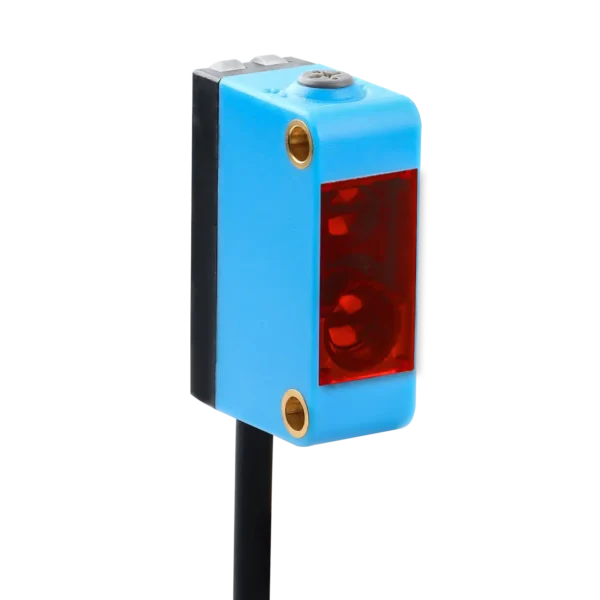
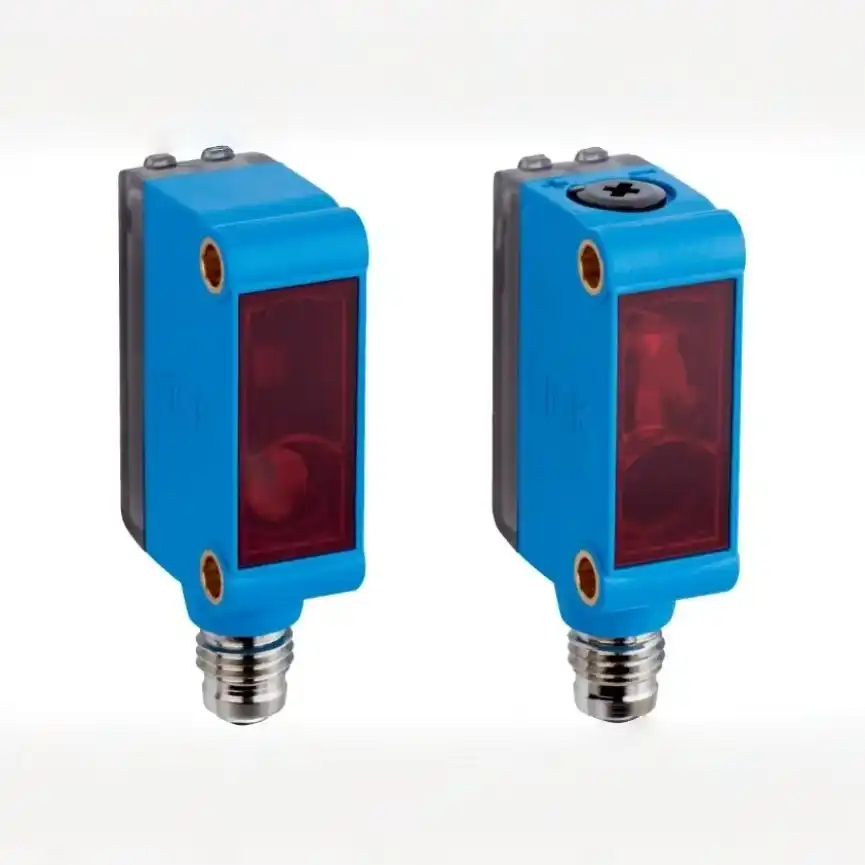
SZ-FJG square photoelectric sensor series
The XSZ SZ-FJG series brings infrared photoelectric sensing to a compact square housing. The supplied series information covers diffuse-reflective, retro-reflective and through-beam configurations for different object-detection layouts. Choose a configuration according to where the target, sensor and any reflector or separate emitter can be positioned.
The optical configuration, sensing distance and NPN or PNP output must be matched to the selected model. These are series choices, not settings that make one sensor perform every detection mode.
Choosing the right detection arrangement
Diffuse reflective
A single sensor looks for light returned from the target. Assess the real object’s size, color, surface and distance before selecting a diffuse model; the distance cannot be inferred from the family name alone.
Retro-reflective
The sensor works with a reflector across the detection path. Check reflector placement, alignment and the selected model’s rated distance for the actual installation.
Through-beam
A separate emitter and receiver establish a beam that the target interrupts. Verify that both sides can be mounted and aligned and that the chosen pair suits the required span.
SZ-FJG series specifications
The supplied material lists the following family-level values and options. Use the exact model’s current datasheet for final electrical design, sensing-distance selection and wiring.
Optical and mechanical format
| Sensor format | Compact square / rectangular photoelectric sensor |
|---|---|
| Light source | Infrared LED, as listed in the series material |
| Detection configurations | Diffuse reflective, retro-reflective or through-beam, depending on model |
| Sensing distance | Model- and target-dependent; confirm the range for the selected configuration |
Series-listed distance options
| Configuration | Distance shown in series material |
|---|---|
| Diffuse reflective | 10–30 cm range across versions |
| Retro-reflective | Up to 2 m |
| Through-beam | 5 m+ listed; upper limit not specified |
These are family-level reference figures, not guaranteed ranges for every SZ-FJG version. Confirm the exact model, test target, reflector or emitter/receiver pair and mounting conditions.
Electrical and environmental data
| Supply voltage | 10–30 VDC, listed for the series |
|---|---|
| Output options | NPN or PNP open collector; select the model to match the controller |
| Operating modes | Light-ON / Dark-ON options are listed; confirm availability on the selected model |
| Maximum output current | 100 mA, listed in the series material |
| Response time | 1 ms maximum, listed in the series material |
| Circuit protection | Reverse-polarity and output short-circuit protection listed |
| Operating temperature | −25 to +55 °C, listed in the series material |
Where this series may fit
A compact square sensor can be considered for presence detection at packaging, paper-handling and small-machine stations where mounting space is limited. Suitability depends on the selected sensing arrangement and the real object, background, lighting and machine geometry.
Checks before selecting a model
- Define the target material, size, surface and travel path; test it at the intended distance.
- Choose diffuse, retro-reflective or through-beam geometry; allow space for a reflector or emitter/receiver pair where needed.
- Match NPN or PNP output, operating mode and wiring to the controller input.
- Confirm mounting dimensions, protection rating, cable arrangement and environmental exposure for the exact part number.
Frequently asked questions
Are diffuse, retro-reflective and through-beam modes available on one sensor?
They are different configuration choices within the supplied series information. Select the exact model for the required detection layout rather than assuming one unit switches among all three.
How do I choose the sensing distance?
Use the distance rating for the selected model and optical setup. Target size and surface, a reflector where applicable, alignment and the background all affect the practical result.
Can I connect it to an NPN or PNP controller input?
The series material lists NPN and PNP output options. Match the chosen model to the controller and follow that model’s confirmed wiring diagram.
What wiring diagram should I use?
Use the diagram supplied for the exact output type and part number before installation. Do not assume NPN and PNP versions share the same connection scheme.