Description
CCD background suppression sensor overview
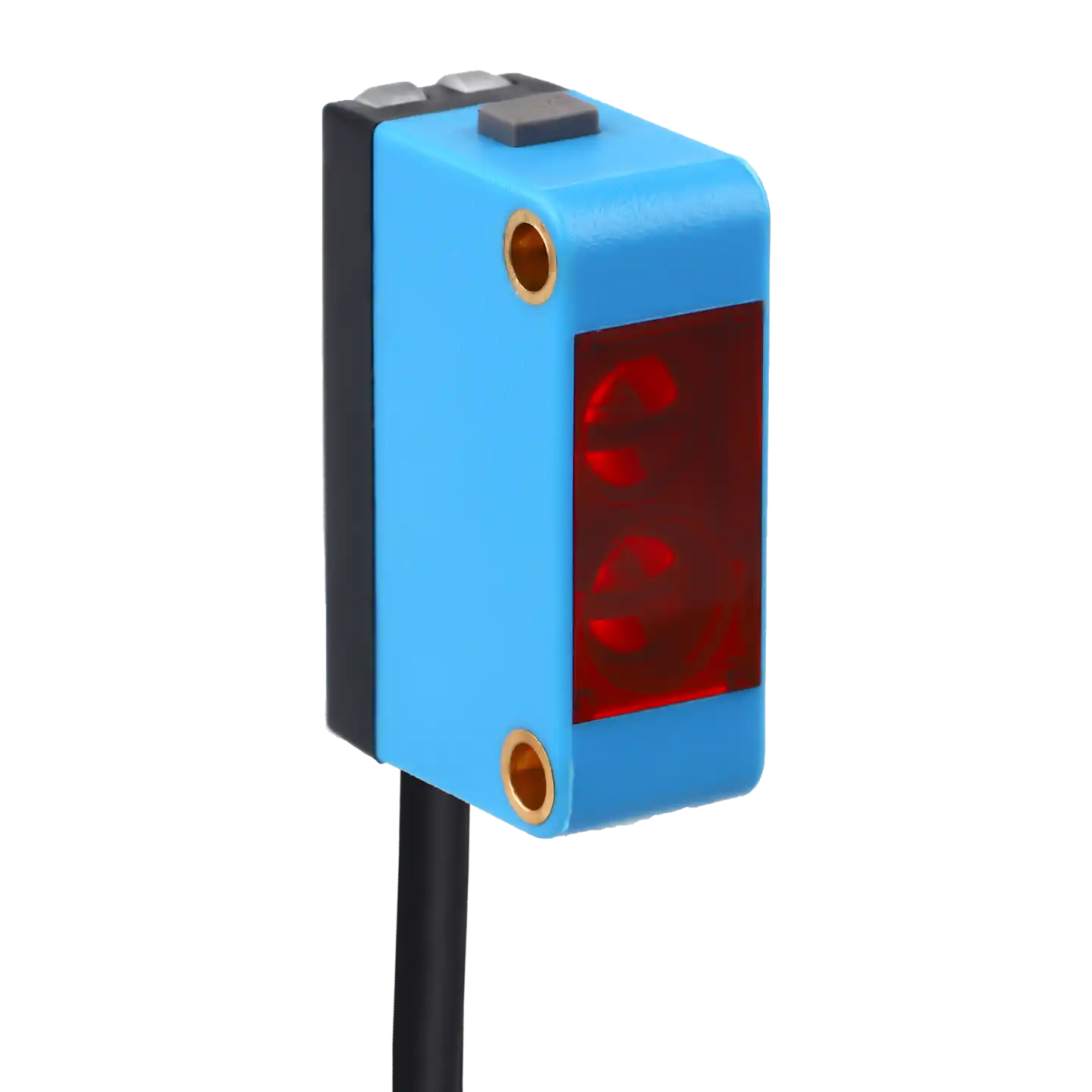
This XSZ photoelectric sensor uses distance-setting background suppression (BGS) to distinguish a target from the surface behind it. The supplied product information describes a CCD-based design and an NPN normally open (NO) output. Before selecting a unit, match the target, background and controller input to the exact model’s current specification.
The listed detection ranges differ by reference target: 10–500 mm for a white board and 10–200 mm for a black board. These values are not a universal sensing distance for every color, finish or installation angle.
| Detection method | Distance-setting reflective / BGS |
|---|---|
| White-board range | 10–500 mm, as listed |
| Black-board range | 10–200 mm, as listed |
| Output | NPN open collector, normally open |
Target color and background separation
A background suppression sensor is selected around the required cutoff: the target should be detected, while the background behind it should remain outside the accepted detection zone. The listed white/black board ranges show why the target’s reflectance matters when setting that cutoff.
Check the real target and background in the machine, including surface finish, angle, distance and available separation. A reflective or multicolored background should be tested rather than assumed to be ignored in every condition.
Technical specifications
These figures are stated in the supplied product information. Confirm them against the exact model’s datasheet before fixing a detection point or electrical connection.
Detection and response
| Detection method | Distance-setting reflective, background suppression (BGS) |
|---|---|
| White-board detection range | 10–500 mm |
| Black-board detection range | 10–200 mm |
| Action / reset response | 3 ms maximum |
Electrical and environmental data
| Supply voltage | 10–24 VDC ±10%; listed ripple under 10% peak-to-peak |
|---|---|
| Current consumption | 30 mA maximum |
| Control output | NPN open collector, normally open; 100 mA maximum |
| Protection grade | IP65, as listed |
Integration and setup checks
Where to evaluate this sensing method
The stated white/black board ranges make this design relevant to part-presence checks where the target and machine background have different positions or reflectance. It may suit a conveyor or packaging station after confirming the actual part, background and required response in a machine trial; the listed 3 ms maximum does not by itself establish a safe conveyor speed.
Before installation
Confirm the correct model, its optical axis, mounting dimensions, target/background gap, 10–24 VDC supply interpretation and NPN NO wiring. The supplied material describes a SET-button teach-in, but the exact procedure and indicator states should be taken from the matching manual before commissioning.
Information to prepare for model selection
- Target material, color, finish, size and distance from the sensor.
- Background material and its distance behind the target.
- Required response timing, controller input and electrical load.
- Mounting space, ambient light, cable/connector and operating environment.
Frequently asked questions
Why are the listed white- and black-board ranges different?
The supplied data gives different ranges for its two reference boards. Use the actual target and background to confirm the cutoff; do not transfer either range to every color or finish.
Does background suppression eliminate every false trigger?
No universal result is established. A reflective surface, target angle or small gap between target and background can change the outcome, so the installed arrangement should be tested.
What output is listed?
The supplied table lists an NPN open-collector, normally open output rated at 100 mA maximum. Verify the exact model and wiring before connecting it to a controller.
Can the sensor be taught from the button?
The supplied description mentions SET-button calibration. Use the operating instructions for the exact model to confirm the procedure and indicator behavior.