
How to Choose an Inductive Proximity Sensor Manufacturer in China
Choose an inductive proximity sensor manufacturer by matching a documented sensor configuration to your application, then checking who controls its design, production, testing, and ongoing supply. Use representative samples and agreed acceptance criteria before committing to production quantities.

Quick Answer: What Should You Look for in a Chinese Inductive Sensor Manufacturer?
Look for a supplier that can turn your detection requirements into a clear, testable offer. Four checks provide a useful starting point:
- Application fit: the proposed sensor matches the target, installation, electrical interface, and operating conditions.
- Clear responsibility: you know which company supplies the product, where production takes place, and who handles engineering questions and changes.
- Configuration-specific evidence: the quotation, datasheet, drawing, wiring information, and relevant compliance documents describe the same product.
- A repeatable supply process: approved samples connect to a controlled specification, production records, and agreed delivery and change-notification arrangements.
Use these checks to decide which suppliers deserve further evaluation. Documents can justify moving to sample testing; successful samples can support the next qualification step. Neither alone establishes that every future unit will meet every application requirement.
Define Your Sensor Requirements Before Contacting Manufacturers
A useful manufacturer comparison starts with the same application brief sent to each candidate. Otherwise, apparently different prices may simply describe different outputs, mounting arrangements, or levels of validation.
Specify the Target, Sensing Distance, Mounting, and Operating Environment
Describe what the sensor must detect: the metal, smallest relevant feature, thickness, shape, movement, and permitted position variation. Give the actual operating gap and available mounting space. A catalogue distance does not, by itself, establish detection of a smaller or different-metal production part; target material and dimensions can change sensing performance. [1]
Also identify nearby metal, the proposed mounting arrangement, temperature exposure, vibration, and contact with coolant or cleaning agents. These details help a supplier judge whether the proposed family fits the detection point. A labelled part drawing and installation sketch are more useful than a request for “a long-range metal sensor.”
Confirm PNP/NPN, NO/NC, Supply Voltage, and Connection Requirements
State the controller input requirements alongside the requested PNP or NPN output, normally open or normally closed operation, documented supply range, and connection arrangement. Include the existing wiring diagram when the machine already exists.
Keep electrical behavior separate from connector appearance. A matching connector does not establish matching pin assignments, switching logic, or input compatibility. The quotation should identify these fields explicitly so the receiving engineer can check the proposed configuration before connecting a sample. Where the controller imposes load, leakage, voltage-drop, or pulse-capture limits, include those limits in the application brief.
Separate Standard Sensors, OEM Customization, and Replacement Models
Tell the manufacturer which kind of request you are making. A standard-model inquiry needs a defined order code and its supporting documents. An OEM variant needs a clear description of what changes and what must remain unchanged. A replacement inquiry needs the original full model number and the machine's actual requirements.
This distinction changes the work behind the quotation. A stocked configuration, a cable-length option, and a redesigned sensing arrangement should not be evaluated as though they require the same engineering review, evidence, or production preparation.
How Can You Verify a Sensor Manufacturer in China?
Verify both the company you will buy from and the organization responsible for the product. Legal identity and production capability answer different questions, so collect evidence for each.
Confirm the Company's Legal Identity and Factory Location
Request the company's Chinese legal name, business identifier, registered address, and stated production location. Official SAMR guidance identifies enterprise names, unified social credit codes, and registration numbers as search identifiers for the National Enterprise Credit Information Publicity System. Use matching identifiers when checking the supplier's records. [2]
Compare the resulting identity with the quotation, invoice details, and contractual supplier. A factory location may differ from a registered office; ask the supplier to explain the relationship. A registration record helps identify the entity. It does not show which operations occur at a particular factory or prove that the factory can produce your required sensor.
Understand the Difference Between Manufacturers and Trading Companies
For purchasing purposes, establish who performs or controls manufacturing and who arranges the sale. A manufacturer may supply through a separate sales company; a trading company may coordinate products from an identified producer. The practical question is whether the responsibility chain is visible and usable.
Ask who can approve a drawing change, investigate an electrical deviation, provide lot records, and authorize a corrective action. A channel can be suitable when these responsibilities and access to evidence are clear. An unresolved handoff between the seller and producer is a reason to seek clarification, regardless of the label used on the website.
Verify Production Capabilities and Engineering Responsibilities
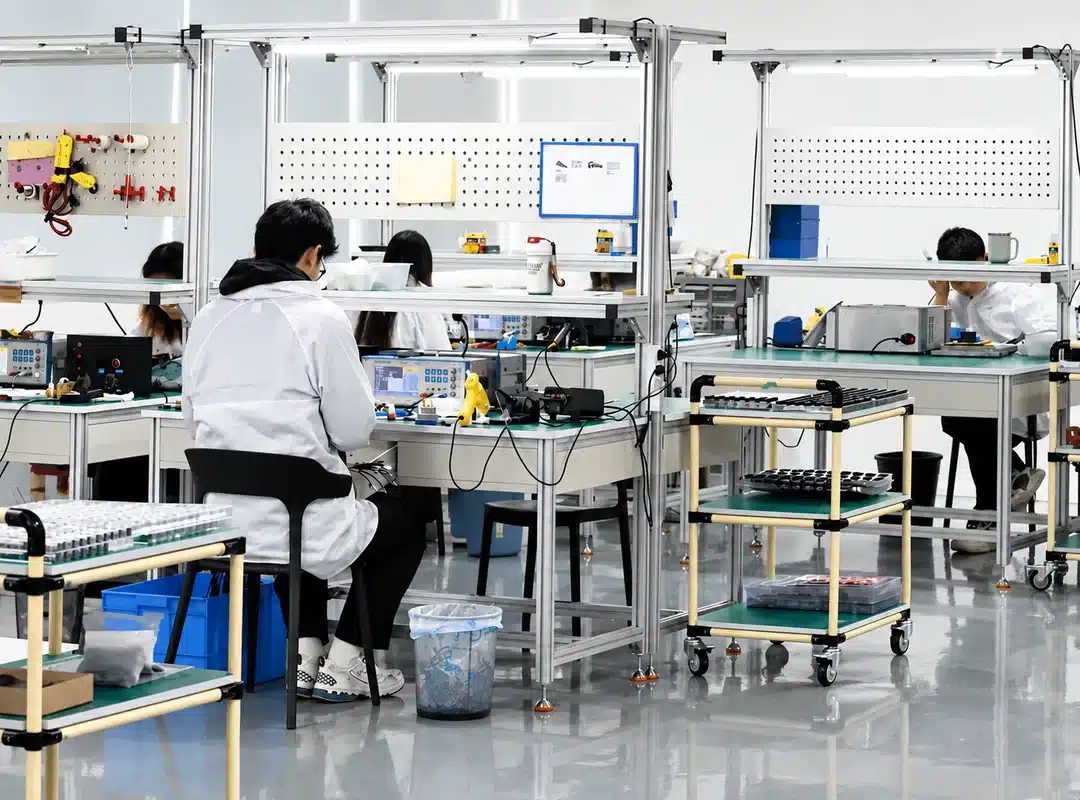
Request evidence relevant to the operations your product requires. Discuss responsibility for design control, assembly, sensing adjustment where applicable, sealing, and final functional checks. Establish which work is performed at the stated site and which is outsourced.
A useful capability review connects the proposed process to a controlled product and a responsible person. Process records, an applicable inspection example, or a focused remote or on-site review can help answer specific gaps. A factory photograph alone cannot establish test coverage, equipment suitability, or the ability to repeat an approved configuration.
What Technical Capabilities Should an Inductive Sensor Manufacturer Have?
The manufacturer should be able to explain and support the requirements that matter at your detection point. A broad catalogue is useful only when the proposed configuration is documented and its limitations are understood.
Review Datasheets, Dimensional Drawings, and Wiring Diagrams
Check whether the full quoted order code appears consistently across the datasheet, drawing, and wiring information. The documents should let you identify the housing dimensions, mounting arrangement, sensing specification, output, supply conditions, and connection details without guessing a suffix.
Investigate conflicting information before ordering samples. A drawing for a cable version and a quotation for a connector version may leave installation length or pin assignments unresolved. Ask for the applicable revision or a written clarification that becomes part of the agreed configuration. A complete document package makes the candidate assessable; it is not a substitute for testing.
Evaluate Sensing Performance Across Materials and Operating Conditions
Ask the supplier to explain how its distance specification relates to your actual part. Reference-target measurements use defined materials and geometry; sensing distance, hysteresis, and switching frequency also describe different aspects of operation. Compare their stated conditions rather than treating them as interchangeable evidence of reliability. [3]
A technically useful response identifies what is already supported by the selected model's data and what still requires an application test. If a target changes from a large steel surface to a small aluminum feature, the supplier should address that change directly. Repeating the original headline range does not resolve the new detection question.
Check Product Range, Housing Options, and Output Configurations
Compare the available configurations with your machine's needs: housing diameter or shape, installation length, mounting method, output arrangement, and connection options. Identify the exact version that fits rather than treating an entire series as one product.
A focused range can be adequate when it covers the application well. A large range may simplify sourcing across several detection points, but it does not establish that every combination of housing, distance, output, and connector is available. Confirm combinations against orderable codes and their corresponding documents.

Assess Application Support and Technical Problem-Solving
Evaluate the supplier's response to one concrete uncertainty in your application. Provide the target drawing, installation constraint, and controller requirement, then ask what evidence or test would distinguish a suitable configuration from an unsuitable one.
A useful response names the decisive condition, explains its effect, and proposes an observation that could resolve it. For example, it may identify a target-path variation that requires testing at the extreme positions. This reveals more about the proposed technical support than a generic promise of engineering assistance, while avoiding an assumption that one good answer proves all future support needs will be met.
How Should You Evaluate Quality Control and Product Compliance?
Assess how the supplier controls the product being ordered, then examine the applicable conformity evidence. Production checks, management-system certification, and product compliance have different purposes.
Review Incoming Inspection, Production Testing, and Final Inspection
Ask how incoming checks address critical supplied parts, how production checks detect process deviations, and what final inspection confirms before release. For each relevant check, establish the item inspected, applicable configuration, method, acceptance basis, and record retained.
The purpose is to understand coverage. A statement such as “tested before shipment” leaves open whether the check covers identification, basic switching, electrical behavior, or another characteristic. Request an applicable record example and its limits. Do not assume that every characteristic is inspected on every unit or that every supplier uses the same sampling or aging process.
Verify Batch Traceability, Consistency, and Change Control
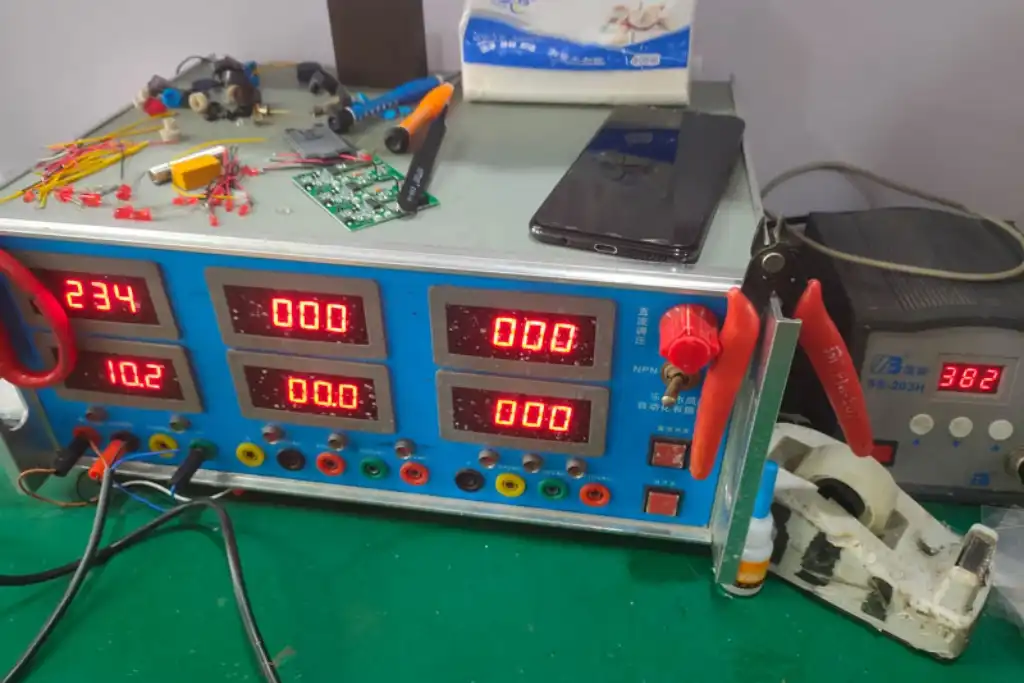
Ask the supplier to show how an order or lot can be connected to the approved specification, applicable inspection records, and any agreed identification on the product or packaging. This connection gives an investigation a defined starting point if a later batch behaves differently.
Also establish what happens when a controlled component, drawing, process, or production location changes. The agreement should identify notification responsibilities and how the change will be evaluated. An approved sample remains useful as a reference only when both parties know which configuration and records it represents.
Check ISO 9001, CE, RoHS, and Other Applicable Requirements
ISO 9001 concerns a quality management system; it does not define the detailed performance requirements of the sensor you are buying. Keep your application specification and acceptance requirements separate from the supplier's system certification. [4]
For a claimed certificate, check the named organization, covered site and scope, status, and issuer. Verify uncertain details with the issuing or accreditation body or the verification routes identified by ISO. ISO itself does not issue these certificates. [5]
CE marking concerns products covered by applicable EU rules that require it; it is not a universal quality certificate for every sensor or destination. Request the relevant declaration and supporting conformity information for the product being supplied. [6] RoHS addresses applicable hazardous-substance restrictions in electrical and electronic equipment, rather than sensing accuracy or production capacity. Check its applicability and supporting evidence for the intended product and market. [7]
Request Evidence That Applies to the Exact Product Model
Compare the product identity, configuration, document revision, and stated test scope. If a report names a series or representative configuration, ask how its coverage relates to the exact order code, including any customized cable, connector, or housing.
When a supplier cites IEC 60947-5-2, ask which edition and relevant assessment evidence support the statement. The official scope of IEC 60947-5-2:2019 includes inductive proximity switches, but a standards reference on a datasheet is not itself a product test report. [8] Resolve gaps in coverage before treating a document as evidence for the proposed configuration.
How Do You Test Samples Before Choosing a Manufacturer?
Use samples to answer defined application questions. Agree on the acceptance criteria before running the tests, and keep the sample identity connected to the quoted configuration throughout the evaluation.
Request Representative Samples and Confirm Their Specifications
Request samples that represent the proposed supply configuration, including the intended output, mounting arrangement, and cable or connector. Record the order code, relevant drawing and wiring revisions, and any supplier-declared differences from planned production.
An engineering prototype can still answer a limited question, but its differences must remain visible. If the prototype uses another connection or housing, record which conclusions can carry forward and what requires confirmation on the production-representative version. Avoid approving a production configuration that has never been clearly identified.
Test Detection Reliability, Wiring, and Environmental Suitability
Qualified personnel should follow the documented connection requirements and applicable machine safety procedures. Verify the required output states with the target present and absent, then confirm that the intended controller input recognizes them. Check the smallest relevant feature, permitted target-position variation, installation gap, and operating speed under the agreed conditions.
Review environmental evidence alongside these functional observations. A short successful bench test does not establish ingress protection, coolant resistance, or service life. Where the application depends on such characteristics, request configuration-applicable evidence and arrange the required evaluation rather than drawing a broad qualification conclusion from basic switching alone.
Define Acceptance Criteria Before Mass Production
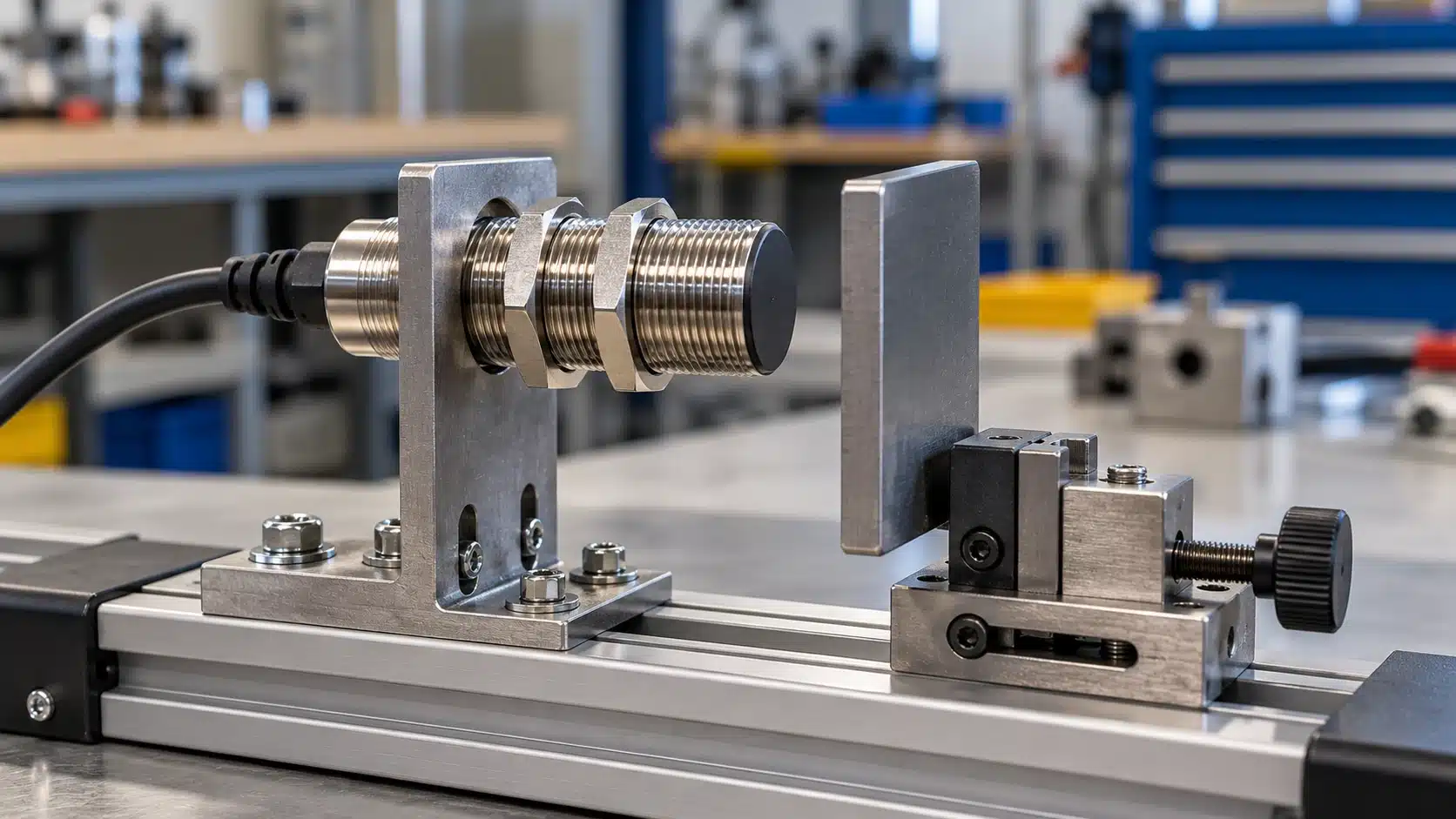
Write acceptance criteria as observable results under named conditions. Replace “works reliably” with a defined target set, permitted positions and gaps, operating sequence, receiving-input behavior, and a reference for judging missed or false detections. The criteria belong before the test; this step records them as the production-approval basis.
Agree how test quantity, duration, environmental evaluation, and defect disposition will be chosen for the application. There is no universal sample count in this guide. The outcome should identify what was evaluated, what passed, and what remains outside the demonstrated scope.
Record Deviations and Approve the Final Configuration
Record a deviation against the affected requirement and its observed conditions. Distinguish a documentation error, a connection mismatch, an application limitation, and a product defect because each needs a different response.
After a correction, repeat the affected checks and consider whether the change affects other agreed requirements. Approve the final configuration by its identifiable documents and test record. Acknowledging that a sample arrived, or that its indicator changed, should not be confused with accepting that configuration for production use.
What OEM and Customization Capabilities Should You Compare?
Distinguish an existing orderable variant from a change that requires engineering work. This helps you understand what the manufacturer can offer now and what still needs feasibility review and validation.
Housing, Sensing Distance, Output, and Connector Options
For each requested option, ask whether it belongs to an existing configuration or changes the product design. Housing dimensions affect fit; an output change affects the receiving interface; a different sensing requirement may require another model or design evaluation.
Keep the unchanged requirements explicit when discussing a variant. The supplier should identify affected documents and the evidence needed before acceptance. Similar appearance does not establish an unchanged detection characteristic, electrical interface, or compliance scope.
Cable Length, Labeling, Packaging, and Private-Label Services
Specify the requested cable length and construction, connection orientation, identification, label content, and packaging needs. Separate a presentation requirement from a technical change so both receive the appropriate review.
For private-label supply, agree how the product remains traceable to its approved specification and responsible supplier. XSZ's published company information describes reviewing application and customization details before confirming an arrangement; that is a starting point for a configuration discussion, not a promise that every requested variant is feasible. [9]
Customization MOQ, Engineering Feasibility, and Approval Process
Ask the supplier to identify feasibility work, documentation, sample stages, any engineering charges, and minimum quantities for the proposed variant. Confirm who approves the specification and which conditions must be satisfied before production release.
A useful quotation distinguishes agreed options from items still under evaluation. Resolve those open items before treating the offer as a production commitment. Do not assume that an acceptable standard-model sample approves a later customized version without checking the effect of its changes.
How Do You Compare Pricing, MOQ, Lead Time, and Supply Reliability?
Compare commercial offers only after establishing a common configuration and identifying unresolved technical requirements. A low unit price is meaningful when you understand what the offer includes and what work remains with the buyer.
Compare Total Procurement Cost Instead of Unit Price Alone
Use the same specification, quantity, currency, and delivery basis when comparing quotations. Identify applicable sample, engineering, validation, packaging, and delivery charges. Clarify whether a quoted option is included or priced separately.
Consider additional integration or replacement work only when its scope can be identified; do not invent a financial penalty to make one supplier look preferable. Where inputs are missing, leave the comparison open and obtain them. An apparently higher quote may include work omitted elsewhere, while a lower quote may be entirely suitable once its scope is confirmed.
Confirm Sample Lead Time, Production Capacity, and Delivery Terms
Separate sample availability from production delivery. Ask whether the proposed date assumes a standard configuration, completed engineering approval, available materials, or a particular order quantity. Record when the quoted lead-time period starts.
For repeat supply, discuss the forecast, expected order pattern, and how the supplier will confirm delivery commitments. A stated factory capacity does not reserve capacity for your order. Request relevant supporting information and an order-specific response instead of converting a general monthly figure into a delivery guarantee.
Review Warranty, Defect Handling, and After-Sales Technical Support
Agree on the stated warranty terms, the information needed to report a problem, and how the supplier will assess an apparent defect. Clarify arrangements for returned samples, replacement or other agreed remedies, investigation records, and technical escalation.
For a sensor problem, the investigation may need the model, wiring, supply conditions, actual target, fault observations, and lot identification. Defining that information route before ordering makes the support commitment more useful than an undefined promise of after-sales service. Record the agreed terms without assuming they are identical across suppliers.
Ask About Component Changes and Long-Term Product Availability
Discuss how controlled component, process, or product changes will be communicated and who decides whether requalification is necessary. Ask how the supplier handles discontinuation notices and proposed replacements.
Long-term availability is a planning discussion, not an indefinite guarantee. Keep the approved part number, drawings, configuration, and change records available so a future alternative can be evaluated against known requirements. A new suffix or proposed replacement should trigger a comparison, not automatic acceptance based on the old product name.
How to Compare and Shortlist Inductive Proximity Sensor Manufacturers
Use the evidence collected so far to make a specific next-step decision. The matrix below organizes that decision; it does not assign an unsupported overall quality ranking.

Build a Supplier Evaluation Matrix Using Verifiable Evidence
| Decision area | Evidence to compare | What changes the decision | Next action |
|---|---|---|---|
| Identity and responsibility | Matched legal identity, production location, and engineering responsibility | Unexplained relationships between seller, producer, and technical contact | Clarify the responsibility chain before relying on production claims |
| Technical configuration | Order code, datasheet, drawing, and wiring revision | Missing fields or conflicting output, connection, mounting, or target conditions | Resolve the configuration; exclude an incompatible candidate version |
| Applicable compliance | Relevant declarations, certificates, and supporting scope | Evidence does not identify or cover the required product and market | Obtain the applicable evidence or keep qualification on hold |
| Sample acceptance | Identified samples and results against agreed criteria | Tests omit a required target, state, installation condition, or receiving-input check | Complete the missing evaluation or address the deviation |
| Repeat production | Approved specification, lot linkage, inspection coverage, and change process | Production cannot be connected to the accepted configuration | Establish traceability and release responsibilities |
| Commercial supply | Comparable quotation and configuration-specific delivery and support terms | Important charges, dates, quantities, or obligations remain unclear | Clarify terms before choosing on price or delivery preference |
A matrix entry should end with a decision, an unresolved question, or a named verification step. “Certificate received” or “sample received” is a document status, not a qualification result.
Separate Mandatory Requirements from Negotiable Preferences
Identify requirements that the application and intended market must satisfy, such as the required electrical interface, installation fit, validated detection behavior, and applicable conformity obligations. Treat an unmet or unresolved mandatory requirement as a gate for the proposed configuration.
Then compare preferences among candidates that can meet those gates: packaging arrangements, preferred order quantities, agreed delivery options, and price. If a requirement is negotiable, document the accepted change and its consequences. Do not let a favorable weighted score conceal an incompatible output or an unresolved necessary compliance item.
Worked Example: Lower Price vs. Better Technical Documentation
Hypothetical comparison: two suppliers quote for the same stated detection point. Supplier A offers the lower unit price but submits a generic datasheet that leaves the output version and connector assignment unresolved. Supplier B provides configuration-consistent documents and a proposed sample evaluation for the stated target.
The next decision is to request the missing configuration details from A and, if B's mandatory requirements are sufficiently documented, proceed with B's sample qualification. B's paperwork does not prove better detection reliability, and A's price does not prove poor quality. If A resolves its gaps, compare both on the same specification, test basis, and commercial scope. Neither response alone authorizes mass production.
What Information Should You Send When Requesting a Quotation?
Send a compact, revision-controlled package that a supplier can answer item by item. Identify unknowns explicitly so an assumption in the first email does not silently become the production specification.
Technical Specifications, Drawings, and Application Requirements
Include the target drawing or representative part description, movement, working gap, mounting sketch, operating conditions, and controller interface. Attach an existing sensor's full model number and documentation when requesting a replacement.
State which dimensions, electrical fields, and detection conditions are mandatory and which are open to a proposal. Ask the manufacturer to return a defined order code with the applicable datasheet, drawing, and connection information, highlighting any exceptions.
Order Quantity, Destination Market, and Customization Needs
Distinguish the sample quantity, intended first production order, and expected repeat demand. Identify the destination market and requested compliance documents without assuming that one certificate covers every product or market.
List requested cable, connector, label, and packaging changes separately. This lets the supplier distinguish standard configurations from feasibility work and quote the appropriate scope rather than infer a variant from an incomplete description.
Sample Evaluation, Required Documents, and Delivery Expectations
Provide the proposed acceptance conditions, the records you need, your evaluation schedule, and the event from which you expect production delivery to be calculated. Ask the supplier to return unresolved technical questions and commercial exclusions with the quotation.
For an XSZ inquiry, the inductive proximity sensor range is a product-family starting point. Bring the application package to the model-selection discussion so the proposed configuration and validation needs can be assessed together. Keep the approved specification, acceptance record, and order terms linked throughout procurement.
Frequently Asked Questions About Chinese Inductive Sensor Manufacturers
How Can I Tell Whether a Chinese Sensor Supplier Is a Real Manufacturer?
Combine identity checks with evidence of production responsibility at the stated site. Ask who controls the relevant process, product documents, testing, and engineering changes. A business record identifies an entity; a photograph shows a location or activity. Neither alone establishes responsibility for manufacturing the configuration you intend to buy.
Can a Trading Company Be a Reliable Industrial Sensor Supplier?
A trading company can be a suitable channel when the producer is identified, technical evidence is accessible, and quality, change, and support responsibilities are clear. Evaluate that arrangement against your requirements. The channel label alone is not a reliable basis for accepting or rejecting a sensor supply proposal.
Should I Request Samples Before Placing a Bulk Order?
For a new application or unqualified configuration, representative samples provide a way to test agreed requirements before a bulk commitment. Existing qualification records may support an unchanged repeat order if they remain applicable. Decide what new evaluation is needed from the actual configuration and risk; sample approval does not replace ongoing production controls.
Can Chinese Manufacturers Produce Custom Inductive Proximity Sensors?
Customization is possible where a supplier has a suitable existing variant or confirms the engineering feasibility of the requested change. Distinguish a documented option from a new design requirement. Confirm the final specification, evidence, approval stages, quantities, and delivery terms rather than assuming every manufacturer can meet every custom requirement.
Is a Factory Audit Necessary Before the First Order?
Choose the depth of supplier assessment according to the purchasing risk and unresolved evidence. A remote review or document check may answer some questions; a focused on-site assessment may be needed to investigate production control or responsibility. A visit does not replace configuration-specific documents and application testing. If a decisive gap remains unresolved, address it before advancing the order.
Technical References
- OMRON — Proximity Sensors: Safety Precautions.
- SAMR — National Enterprise Credit Information Publicity System reputation-information notice, 2023.
- OMRON — Proximity Sensors: Explanation of Terms.
- ISO / IAF — ISO 9001: What does it mean in the supply chain?.
- ISO — Certification.
- European Union — Your Europe: CE Marking.
- European Commission — RoHS Directive.
- IEC — IEC 60947-5-2:2019, Proximity Switches, Edition 4.0.
- XSZ Sensors — About Us.